Promising to Write Less!
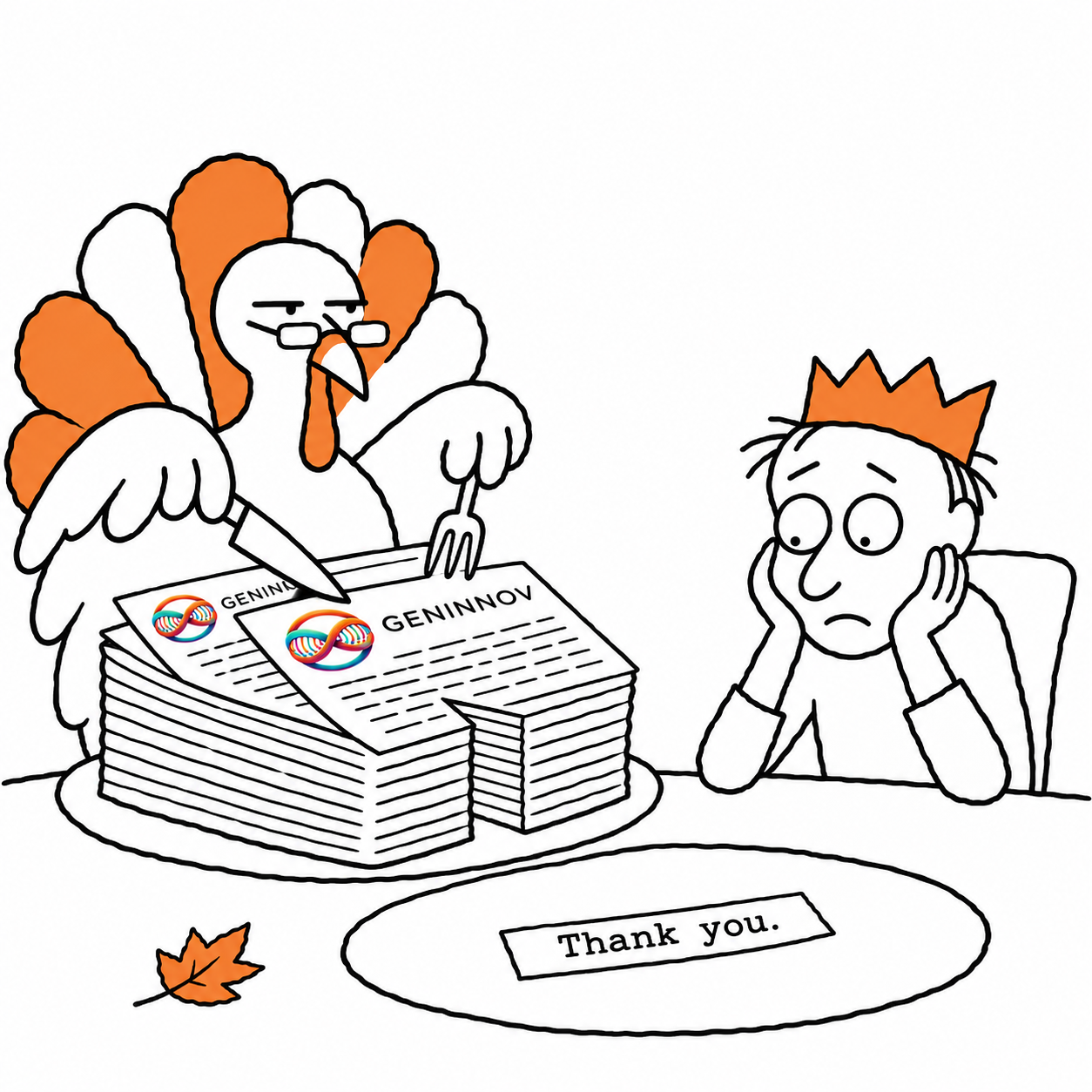
Thanksgiving is a good week to thank readers. We write for two reasons. Writing forces us to cover every base. Publishing our more contested views lets readers tell us when we have taken a wrong turn. Many did this year. We are grateful.
This year we wrote long pieces, often. An old lesson from research management days says that writing with a fixed rhythm or a fixed style loses its readers over time. December will look like the months before it. The new year will bring a change. We plan to write about once a month and to say less each time. Our internal processes are rigorous enough now to stand without a long published draft.
Staying quiet when so much happens will be hard. This note is a rehearsal.
The Fog Over the Numbers
The times are a-changin’, and in more ways than one. For two years, nobody had to parse cyclicals. A cycle is now possible. Parsing starts here. A small number of macro points before.
We keep detailed data center models, built bottom-up and top-down. We built them because the public numbers are a fog. Announced capacity is quoted as planned. Planned is quoted as installed. AI capacity is mixed with other kinds. Totals are confused with additions. Readers who visit our office are welcome to see how we pull these apart.
The work has produced dozens of charts, several findings with macro implications, and scores of chokepoints, each with its own stock implications. The models are built to move as the facts move. Next year’s news flow will be messier.
One finding guides the others. Tokens behave like electricity. Latent demand can be any number. Actual consumption equals the supply made available. Many emerging countries lived for decades with less power than they wanted. People adjusted. If less compute gets built than the world wants, the world will live within it.
A second finding gets less attention than it should. In compute, the US has found a remarkable export.
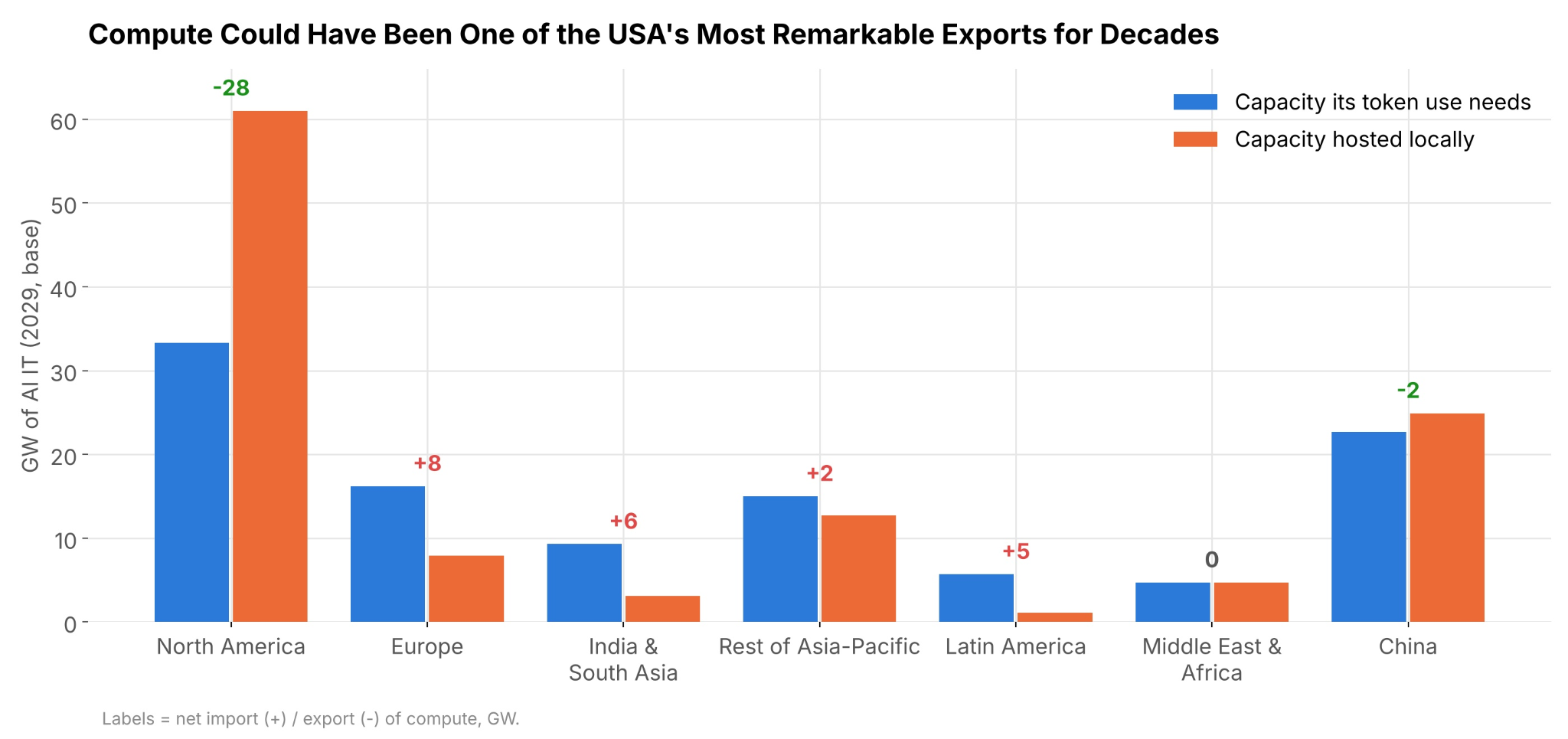
Its own politics may yet turn on the machine. Much of the world would welcome the business. Energy-rich countries in the Gulf already see the point. Compute sent down a wire carries a better margin than fuel shipped through contested waters, with more control over price.
A Season for Sorting
For two years, everything grew together. Nobody needed to sort. Now plans can be delayed or cancelled out of fear, financing, or politics, with nothing wrong in demand. The question for this season is who gets bruised and who falls off a cliff.
Three stick figures answer it: the meter reader, the builder, and the toolmaker. They share one boom. They live through three different cycles. Going against the style of the article, let’s use more words than needed: they live through three different types of cycles.
The Meter Reader: The First-Order Beneficiaries
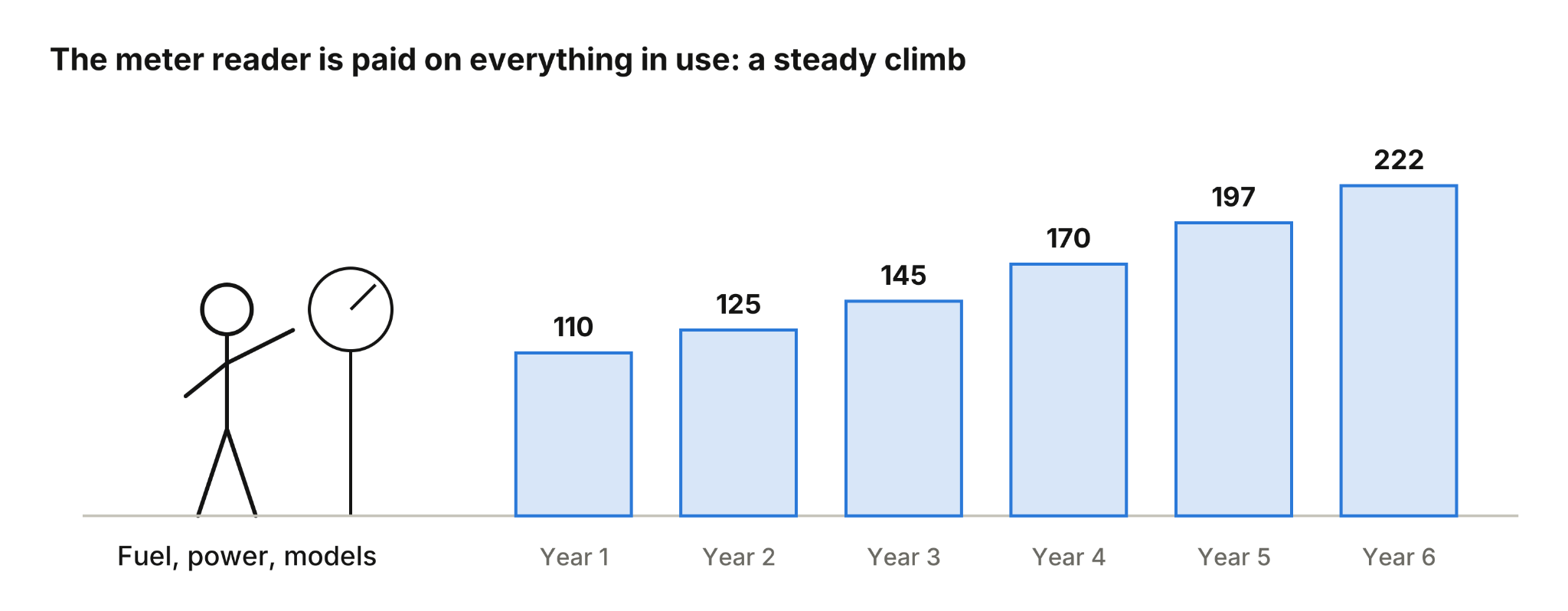
Tokens need power. Power needs fuel. Model makers, utilities, and fuel suppliers are paid on everything in use. When capacity in use rises from 100 to 110 to 125, so does their business. If building stopped tomorrow, the meter would still run. Their worst year is a flat one, unless capacity is destroyed.
The Builder: The Second-Order Beneficiaries
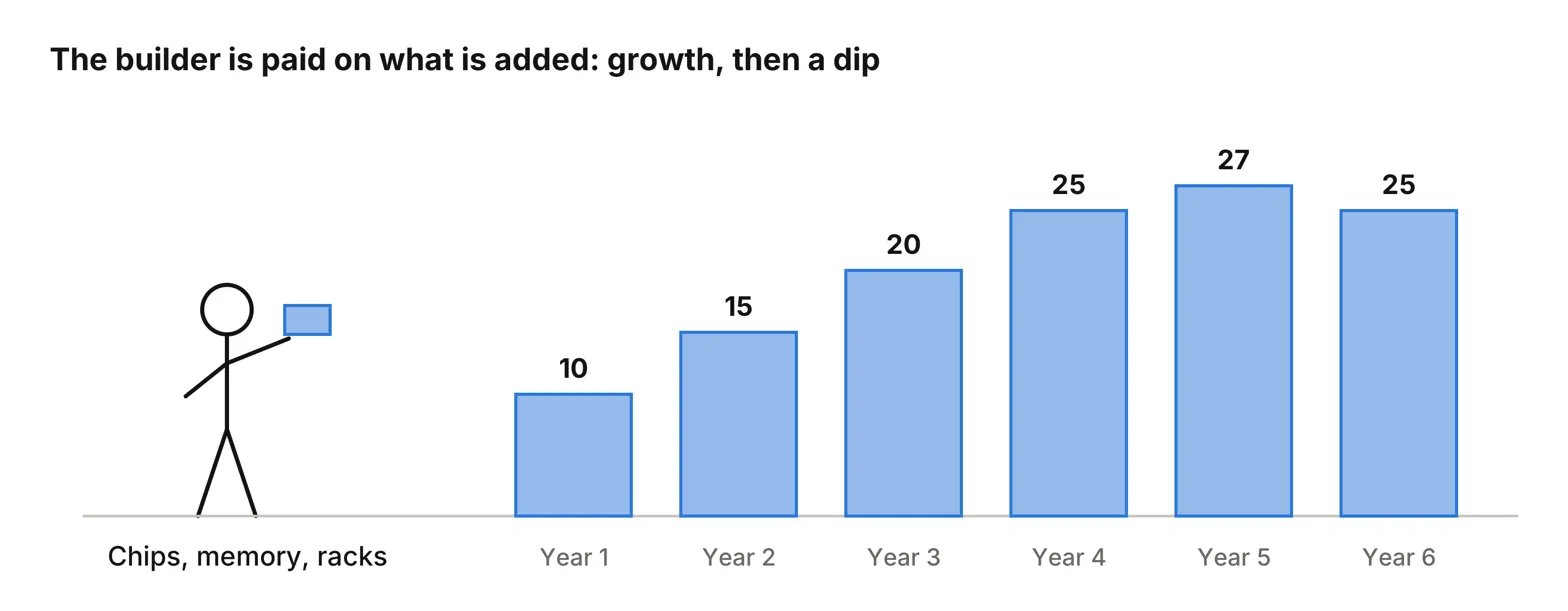
Chips, memory, and racks are sold into new capacity only. Yesterday's data centers pay the builder nothing. If the world adds 10 units this year and 10 next year, the world has grown twice, and the builder has grown zero.
The builder grows only when each year's addition beats the last. A smaller addition is a falling year for the builder, in a world still setting records for use.
The Toolmaker: The First-Order Beneficiaries
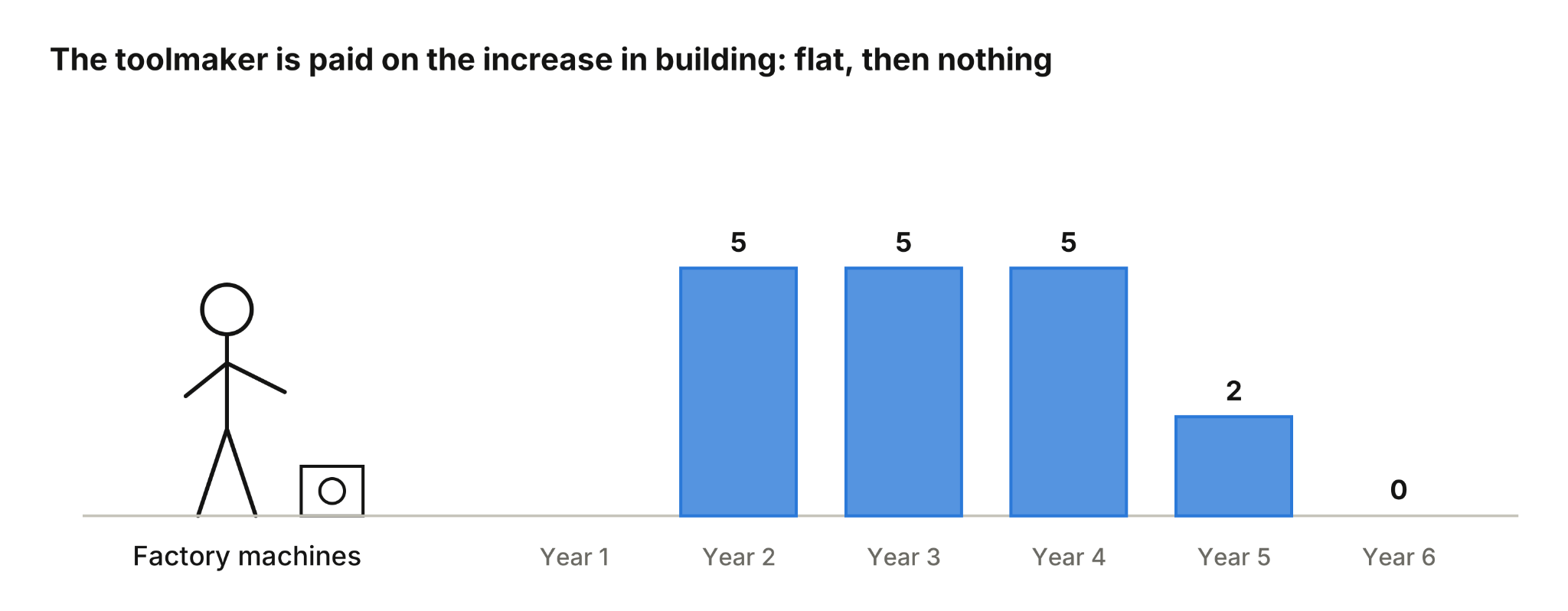
The toolmaker sells factory machines to the builder. A chip factory sized for 20 units a year can serve 20 units a year forever. New machines are needed only when the build itself rises. So the toolmaker is paid on the increase in the addition. A record year of building that merely matches the year before brings the toolmaker no orders.

Read the last two rows. In year 5, use is up 16% and building sets a record. Tool orders fall 60%. In year 6, use is up 13%, building slips 7%, and tool orders are nil. Nothing went wrong with demand.
Stick Figures Lie a Little
Writing less costs nuance. Sketches cost more. There is also the fear that readers miss a critical point when so much is packed into so little, with the repetitions, like adjectives, taken out.
So, back to nuance. Life is less tidy. The toolmaker services every machine it ever sold, which puts a meter reader’s floor under a toolmaker’s business. Machines also wear out and get upgraded. The builder can grow in a flat year when a more complex chip sells for more and uses more wafers. Most companies are two figures at once.
The sketches still earn their keep. When plans are cut with demand intact, the first question about any company is which figure it mostly is. Our choke point ladder starts there.
Writing less has one mercy. It spares us from holding forth on controversial topics. We will only wonder how future generations will discuss a US economy that walked away from one of the best net exports to emerge in decades.
Closer to our kind of work, it is time to split hairs, in case a cyclical downturn awaits everyone in 2027. We have begun the sorting in less than a third of our usual length. For that, and for a year of corrections, we give thanks. Happy Thanksgiving.